2 Me gusta
No se si reír o llorar…
3 Me gusta
Cuando se muera hay que comprar más.
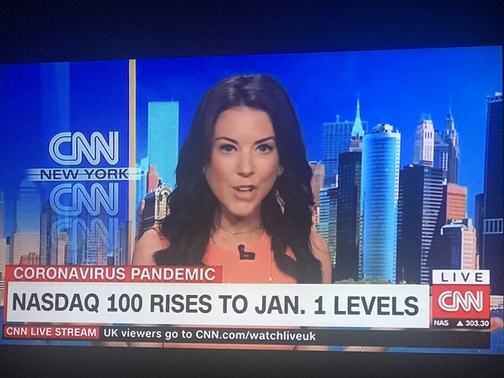
Se supone que esta semana y la que viene se presentan resultados en USA no? se espera una pequeña bajada o ya hemos visto todo el suelo que ibamos a ver?
saludos!
1 me gusta
E ahí la pregunta del millón
3 Me gusta
En esto cada uno se tiene que mojar, no vale la opinion del otro, cada uno tendria que hacer su propio analisis, lectura, lo que sea de lo que puede pasar.
Hay muchas opiniones en varios hilos que podrian servir de orientacion, pero esto no es como pedir consejo sobre una empresa, que puede ser buena o no, el mercado ahora, ni nunca, es bueno o malo, es lo que piensan los inversores.
Van a salir resultados, como seran? pues en principio suena que tienen que ser malos o mejor dicho empezar a ser malos.
Como se lo tomara el mercado? tambien depende de las expectativas de los analistas.
Te puede salir una empresa con resultados positivos, ser menores de lo esperado e irse abajo, y exactamente lo contrario, tener resultados negativos pero por encima de lo esperado e irse hacia arriba.
Y si esto lo conjugas con la evolucion del mercado el dia que salgan pues lo complica mas.
Y si añades, no solo los resultados actuales si no el guidance previsto por la empresa pues todavia te puede sorprender mas.
Es muy complicado tratar de adivinar que hara una empresa que presenta resultados. Estos dias empezaras a verlo
4 Me gusta
2 Me gusta
11 Me gusta
La prohibición de cortos en el Ibex35 finaliza mañana…
Lo han prorrogado un mes más.
6 Me gusta
Seguimos su testamento: 90% indexado al SP500 10% cash. 
Cree en el señor Buffet y nada te faltará. 
1 me gusta
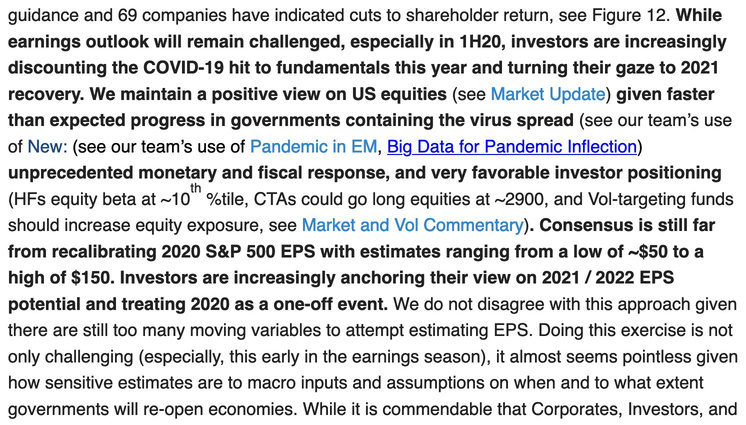
Hoy no caerán. Con los datos del estudio de Redemsivir el mercado ha reaccionado muy positivamente.
1 me gusta
Los futuros de USA vienen verdes verdes 
No termino de entender cómo Royal Dutch Shell o Repsol por ejemplo están subiendo hoy como si todo estuviera genial, y por otro lado el petroleo va en picado… 
1 me gusta
en el consultorio de esta mañana de radio capital han explicado el por qué de las subidas, y creen que van a subir aún más
Si crees que en un año la situación del petroleo se normalizará, no es tan extraño.
El mercado normalmente cae en situaciones de pánico general o de desconfianza hacia los resultados de la inversión en acciones. Por ahora parece que todo el mundo acepta que este año será un desastre, pero que nos recuperaremos eventualmente y es todo temporal, un “one-time issue”. Visto así, adquirir acciones de Shell ahora con vista a 5 años puede resultar muy rentable.
Respecto a desconfianza en el rendimiento de las acciones, los bajos tipos de interés hace que otros motores de inversión resulten poco apetecibles, de forma que sube la cantidad de capital en el mercado de valores. Sumemos a esto la enorme liquidez que ha inyectado Estados Unidos, y tiene sentido que vaya subiendo.
A fin de cuentas todo esto es post-dicción y puede que nada de esto sea la causa, pero no veo tan extraño que suban valores más castigados. Es posible que haya bajadas fuertes en un futuro no tan lejano, especialmente si hay recaídas en los picos de contagio, pero tampoco podemos descartar que ya hayamos visto el suelo.
2 Me gusta
Invierte en el futuro, no en el pasado/presente.
El petróleo es cíclico, ahora el precio es muy bajo porqué está en la parte baja del ciclo. Ahora compras petroleras para cuando el precio esté en la parte alta del ciclo.
Luego ya verás si quieres vender o no ;D
3 Me gusta
Yo he vendido OXY porque ha recortado dividendo, para mi estrategia no es válida, asumo que me equivoqué al comprarla, puesto q había adquirido Anadarko y asumió mucha deuda, para aprender perder.
1 me gusta
Charlie Munger: ‘The Phone Is Not Ringing Off the Hook’
Provided by Dow Jones
Apr 17, 2020 10:14 AM EDT
By Jason Zweig
If the coronavirus lockdown has frozen your investing plans, you’re in good company. Charlie Munger is watching and waiting, too.
Mr. Munger, vice chairman of Berkshire Hathaway Inc. and Warren Buffett’s longtime business partner, likes to say that one of the keys to great investing results is “sitting on your ass.” That means doing nothing the vast majority of the time, but buying with " aggression" when bargains abound.
I spoke this week by phone with Mr. Munger, who turned 96 years old on Jan. 1. He sounded as sharp and vigorous as ever, and as usual he drew bright lines between what he’s fairly certain of and what he thinks belongs in the “too-hard pile” – where he and Mr. Buffett consign questions they don’t know how to answer. Overall, Mr. Munger made it clear that he regards this as a time for caution rather than action.
In 2008-09, the years of the last financial crisis, Berkshire spent tens of billions of dollars investing in (among others) General Electric Co. and Goldman Sachs Group Inc. and buying Burlington Northern Santa Fe Corp. outright.
Will Berkshire step up now to buy businesses on the same scale?
“Well, I would say basically we’re like the captain of a ship when the worst typhoon that’s ever happened comes,” Mr. Munger told me. “We just want to get through the typhoon, and we’d rather come out of it with a whole lot of liquidity. We’re not playing, ‘Oh goody, goody, everything’s going to hell, let’s plunge 100% of the reserves [into buying businesses].’”
He added, “Warren wants to keep Berkshire safe for people who have 90% of their net worth invested in it. We’re always going to be on the safe side. That doesn’t mean we couldn’t do something pretty aggressive or seize some opportunity. But basically we will be fairly conservative. And we’ll emerge on the other side very strong.”
Surely hordes of corporate executives must be calling Berkshire begging for capital?
“No, they aren’t,” said Mr. Munger. “The typical reaction is that people are frozen. Take the airlines. They don’t know what the hell’s doing. They’re all negotiating with the government, but they’re not calling Warren. They’re frozen. They’ve never seen anything like it. Their playbook does not have this as a possibility.”
He repeated for emphasis, “Everybody’s just frozen. And the phone is not ringing off the hook. Everybody’s just frozen in the position they’re in.”
With Berkshire’s vast holdings in railroads, real estate, utilities, insurance and other industries, Mr. Buffett and Mr. Munger may have more and better data on U.S. economic activity than anyone else, with the possible exception of the Federal Reserve. But Mr. Munger wouldn’t even hazard a guess as to how long the downturn might last or how bad it could get.
“Nobody in America’s ever seen anything else like this,” said Mr. Munger. “This thing is different. Everybody talks as if they know what’s going to happen, and nobody knows what’s going to happen.”
Is another Great Depression possible?
“Of course we’re having a recession,” said Mr. Munger. “The only question is how big it’s going to be and how long it’s going to last. I think we do know that this will pass. But how much damage, and how much recession, and how long it will last, nobody knows.”
He added, “I don’t think we’ll have a long-lasting Great Depression. I think government will be so active that we won’t have one like that. But we may have a different kind of a mess. All this money-printing may start bothering us.”
Can the government reduce its role in the economy once the virus is under control?
“I don’t think we know exactly what the macroeconomic consequences are going to be,” said Mr. Munger. “I do think, sooner or later, we’ll have an economy back, which will be a moderate economy. It’s quite possible that never again – not again in a long time – will we have a level of employment again like we just lost. We may never get that back for all practical purposes. I don’t know.”
Berkshire won’t escape unscathed. “This will cause us to shutter some businesses,” Mr. Munger said. “We have a few bad businesses that…we could be tolerant of as members of the family. Somebody else would have already shut them down. We’ve got a few businesses, small ones, we won’t reopen when this is over.”
Mr. Munger told me: “I don’t have the faintest idea whether the stock market is going to go lower than the old lows or whether it’s not.” The coronavirus shutdown is “something we have to live through,” letting the chips fall where they may, he said. “What else can you do?”
Investors can take a few small steps to restore a sense of control – by harvesting tax losses, for instance – but, for now, sitting still alongside Mr. Munger seems the wisest course.
Write to Jason Zweig at intelligentinvestor@wsj.com
9 Me gusta